ADME Tox
Greater than 70% of investigational new drugs fail during drug development because of unsatisfactory absorption, distribution, metabolism, excretion and toxicity (ADMET) characteristics. Tools that help to predict the ADMET response early in the development chain are an advantage as they avoid wasting valuable resources on compounds destined ultimately to fail.
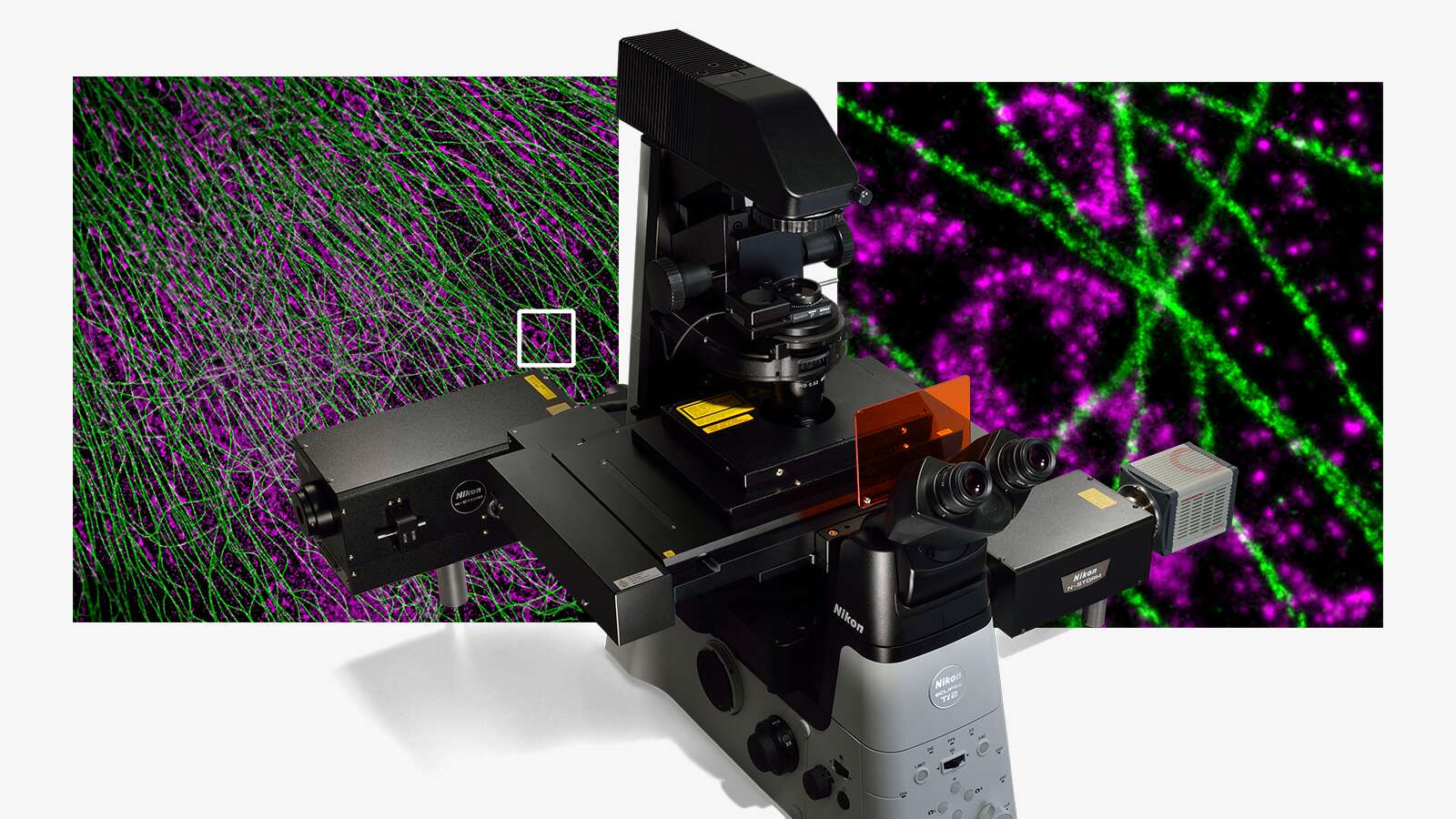
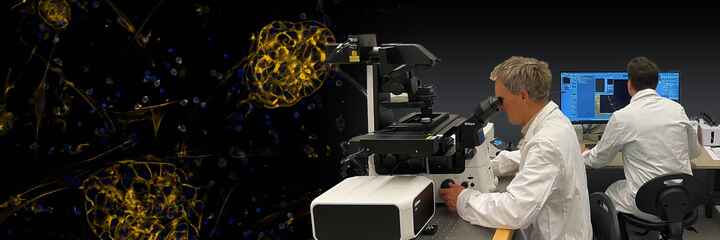
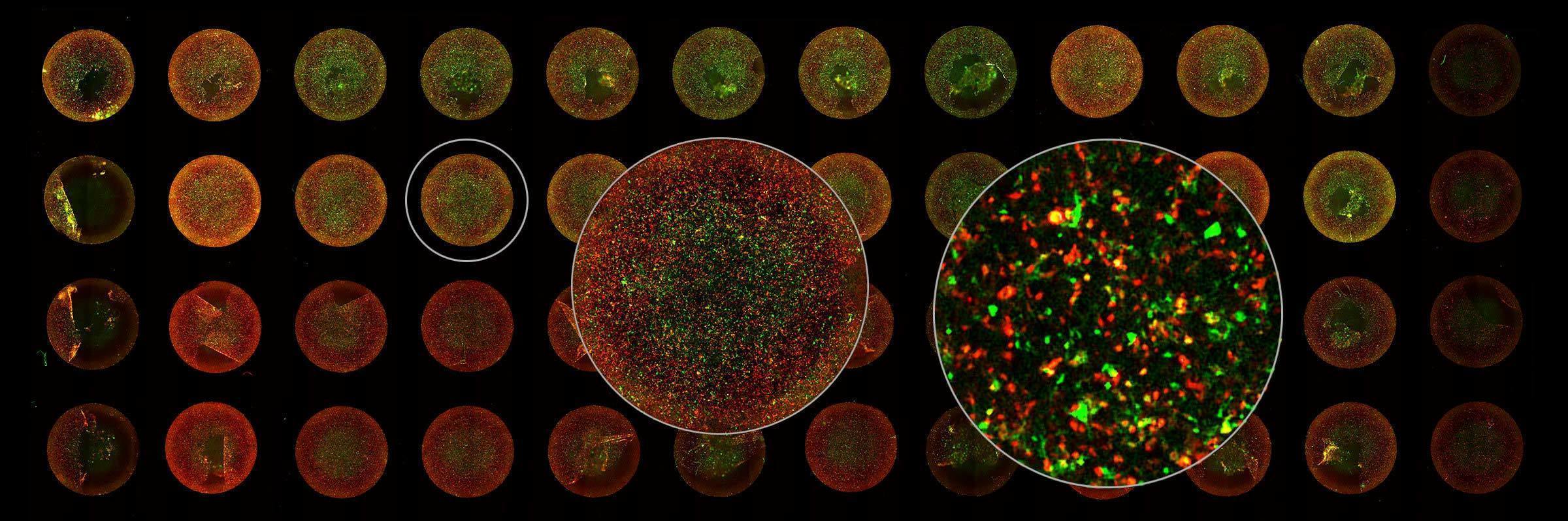
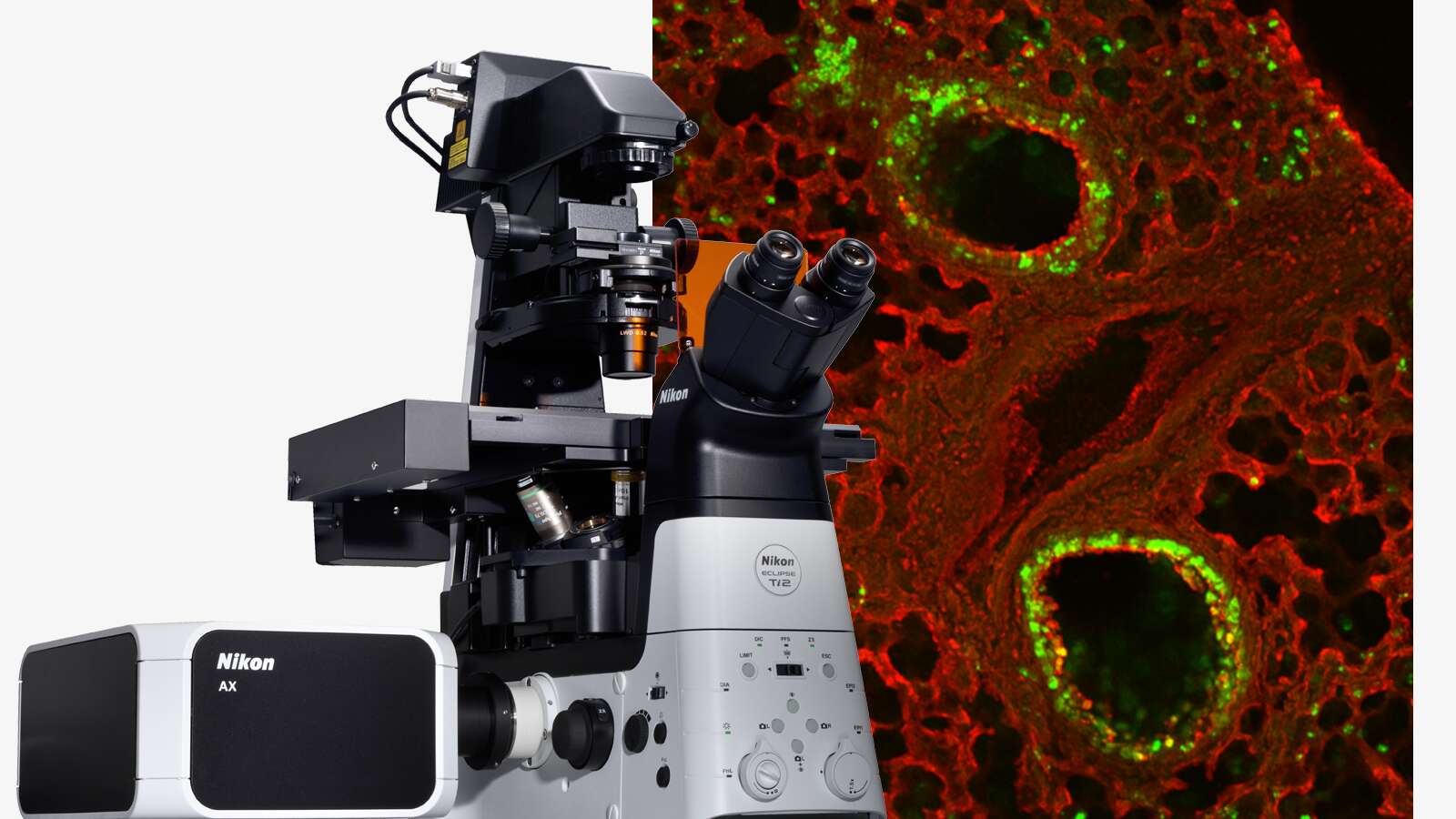
Microscopy is increasingly being recognized as a valuable tool in ADMET testing, which can be employed in both in vitro in vivo preclinical studies. Microscope images can reveal multiple pieces of information (high content imaging) on the cellular response to drug compounds in one experiment. This might include the simultaneous acquisition of data on drug-receptor binding, where this occurs in the cell, and any morphological effects of drug treatment. The ability to use several protein-specific fluorescent probes in one experiment is a key enabling technique in high content imaging.
Time-lapse imaging can be used to monitor downstream drug effects and, ultimately, excretion from the cell. Once images have been digitally captured, it is also possible to examine the data retrospectively in response to new questions about the drug compound. Microscopy images have the advantage that they are easily machine readable with appropriate image analysis software. This makes microscopy amenable to medium- to high-throughput analysis (depending on bioinformatics capabilities). Motorized and computer controlled microscopes are essential for automated image capture and for incorporation into medium / high throughput environments.
Key techniques include brightfield, darkfield, phase contrast, DIC, fluorescence, confocal, time-lapse, multidimensional imaging, FRET/BRET, FLIM, FRAP.
Associated Products
-
Eclipse Ti
Advanced inverted microscope systems offering unprecedented functionality, including built-in Perfect Focus and high-speed motorization.
Cell Signaling, Regenerative Studies, Veterinary, Cell Biology Live, Cell Culture…
-
Eclipse TE2000-PFS
Motorized inverted research microscope with the exclusive Nikon Perfect Focus System for continuous focus correction.
Cell Biology Live, Cell Culture, ADME Tox, Target Identification
-
Eclipse C1si Confocal
Quantitative spectral imaging confocal system offering true, accurate wideband spectral detection and superior spectral resolution.
Palaeontology, Cell Biology Live, Chemical Biology, Neurobiology, Molecular Pathology…
-
A1R-A1 Confocal
Nikon’s groundbreaking confocal system offering greater speed, higher resolution and unprecedented system flexibility.
Palaeontology, Regenerative Studies, Cell Biology Live, Chemical Biology, Neurobiology…
-
BioStation CT
A fully integrated, self contained cell culture observation device and monitoring system.
Plant Science, Regenerative Studies, Cell Biology Live, Cell Culture, Embryology/IVF…
-
BioStation IM
The world's first totally integrated cell incubation and monitoring system.
Regenerative Studies, Cell Biology Live, Cell Culture, Embryology/IVF, Molecular Pathology…